

Latest Version
July 29, 2025
Supercent Inc.
Simulation
iOS
0
Report a Problem
More About :game
Pizza Simulator! puts you in charge of your own pizza business. Instead of simply preparing food, you must manage the entire restaurant experience, from making pizzas and serving customers to improving your kitchen and reinvesting your earnings.
Developed by Supercent, the game combines cooking simulation, restaurant management and tycoon-style progression. You begin with a modest operation and gradually work toward building a larger, more efficient pizzeria.
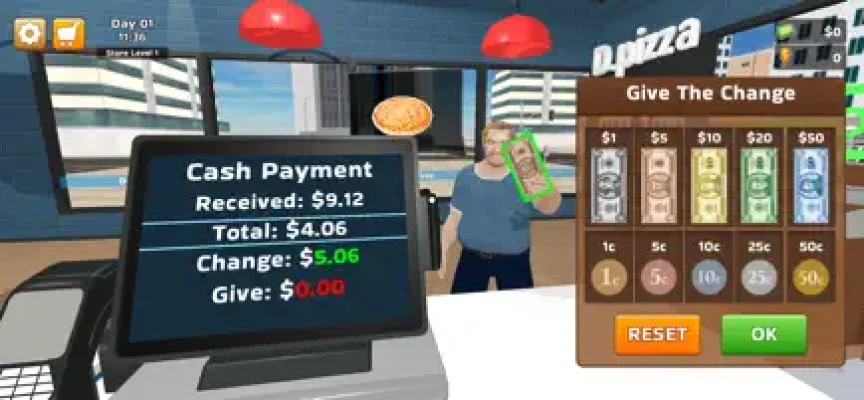
The gameplay revolves around keeping customers happy while making your business more profitable. You can prepare different pizza varieties, organize your workspace, adjust menu prices, hire part-time workers and unlock additional areas as your restaurant develops.
Whether you enjoy food games, business simulators or casual management challenges, Pizza Simulator! offers a hands-on experience where every improvement can help your pizzeria run more smoothly.
Main Features of Pizza Simulator!
1. Cook Different Types of Pizza
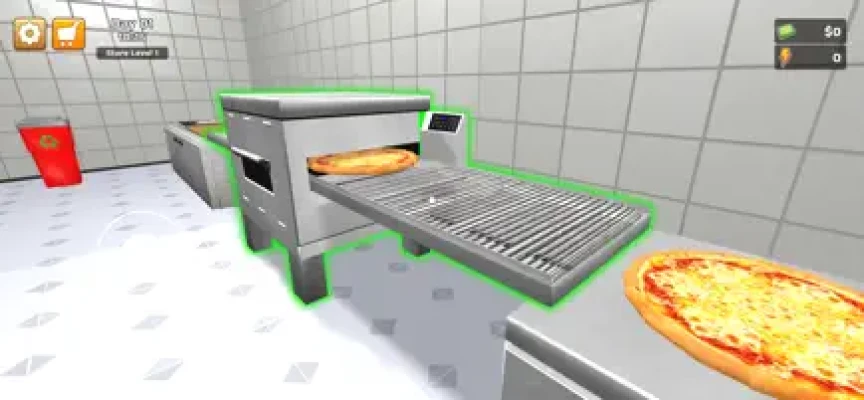
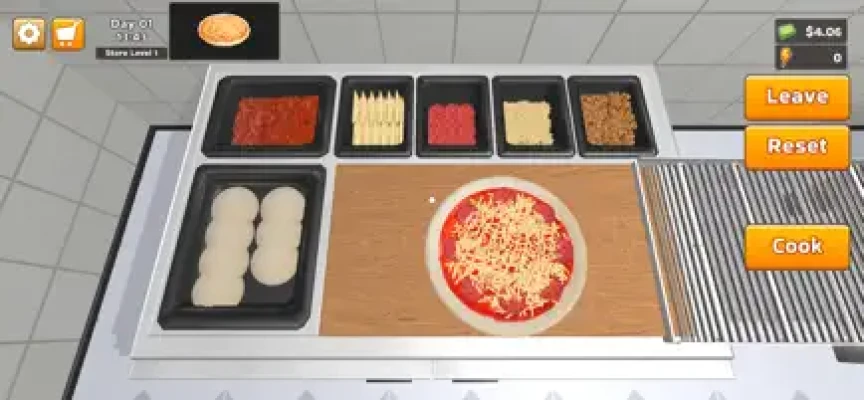
Pizza making is at the heart of the experience. Prepare popular varieties, including cheese, potato and pepperoni pizzas, while learning how the kitchen stations work together. Each order is an opportunity to practice your timing and improve the flow of your service.
2. Build and Expand Your Pizzeria
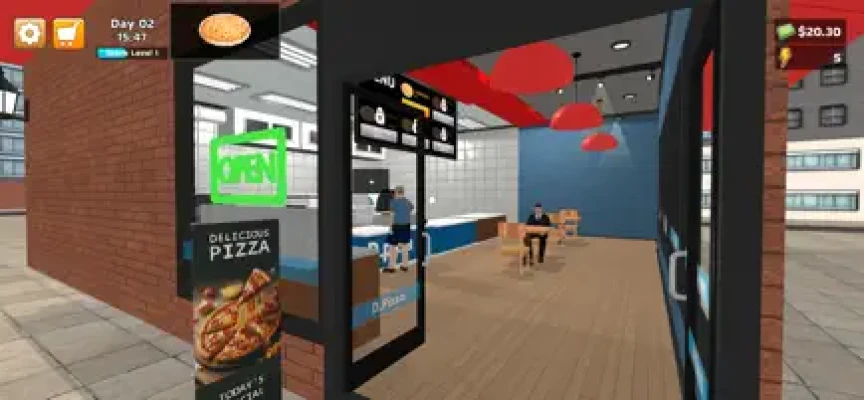
Start with a small pizza shop and gradually develop it into a larger restaurant. Unlock additional areas, improve the layout and create more space for customers and kitchen operations as your business grows.
3. Manage Restaurant Operations
Running a successful pizzeria requires more than good cooking. You must keep ingredients available, handle customer orders, manage your available resources and make sensible decisions about the way your restaurant operates.
4. Hire Part-Time Employees
As customer traffic increases, handling every task yourself can become difficult. Hiring workers helps you develop a more manageable operation and focus on improving the restaurant instead of getting overwhelmed by individual tasks.
5. Upgrade Kitchen Equipment
Better equipment and an improved kitchen layout can help make food preparation more efficient. Investing in useful upgrades allows you to prepare for increasing demand and keep your service moving.
6. Set Prices and Grow Profits
Pizza Simulator! includes menu pricing, giving you another way to manage your business. Your goal is to balance the money you earn with the need to keep your restaurant attractive to customers.
7. Customize Your Restaurant
Decorations, lighting, seating areas and other improvements let you develop a more welcoming pizzeria. These changes also give you a sense of progression as your small business becomes a more established restaurant.
8. Enjoy Casual Tycoon Gameplay
The game combines short cooking tasks with longer-term business decisions. You can concentrate on preparing orders during busy periods and then use your earnings to improve the restaurant for future customers.
Complete Pizza Simulator! Strategy Guide
Getting Started: Learn the Kitchen Workflow
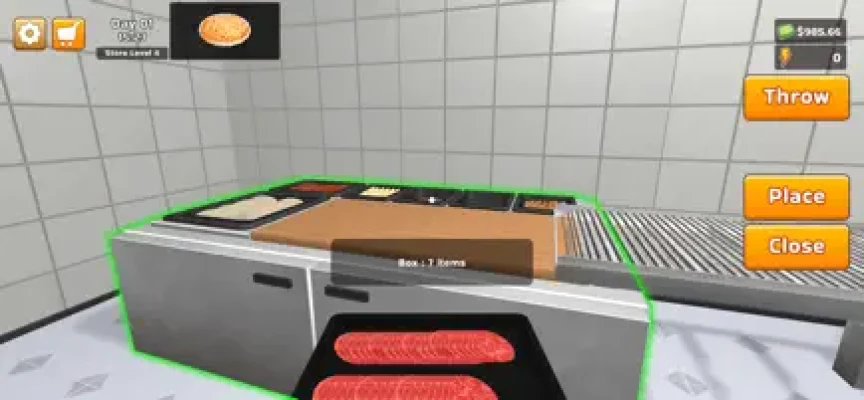
When you first enter Pizza Simulator!, concentrate on understanding how an order moves through your restaurant. Learn where ingredients are stored, how pizzas are prepared, where they are baked and how completed orders are finished and served.
Avoid trying to optimize everything immediately. Your first priority is to complete orders correctly and understand the controls.
Follow these beginner strategies:
Learn each preparation station before spending heavily on upgrades.
Pay attention to the ingredients required for different pizzas.
Complete every stage of an order carefully.
Keep the kitchen organized so you can move between tasks efficiently.
Use the early stages to identify which actions slow you down most often.
A smooth routine is more valuable than rushing through every interaction. Once the process becomes familiar, you can serve customers with fewer unnecessary movements.
How to Make Pizza More Efficiently
Pizza preparation involves several connected tasks, so consistency is important. An unfinished pizza can occupy valuable kitchen space and delay other orders.
Use the following approach:
Step 1: Check the order. Identify the requested pizza and make sure you understand what needs to be prepared.
Step 2: Prepare the ingredients. Collect the necessary ingredients and follow the available preparation steps in the correct order.
Step 3: Complete the cooking process. Use the oven as directed and keep track of pizzas that are waiting to be finished.
Step 4: Finish the pizza. Complete any cutting or final preparation required by the game before attempting to serve it.
Step 5: Clear the station. Make sure the finished order has moved through the workflow correctly before starting another task at the same station.
The most important lesson is to finish each stage completely. Starting additional pizzas without clearing completed orders can create a bottleneck that slows down the whole restaurant.
How to Serve More Customers
As your restaurant becomes busier, customer service becomes an important part of your strategy. Faster preparation helps, but speed alone is not enough if orders are left unfinished.
To improve your service:
Keep frequently used ingredients ready when possible.
Learn the preparation sequence for your regular pizza varieties.
Avoid switching between tasks without a clear reason.
Finish pizzas waiting at the final preparation station.
Expand the kitchen when limited workspace begins affecting your routine.
Hire employees when managing every task yourself becomes inefficient.
Observe where delays occur. If pizzas are ready but waiting to be cut or served, improving the oven alone may not solve the problem. Focus on the stage that is actually slowing down your operation.
Best Upgrade Strategy
Upgrades should solve real problems rather than simply make the restaurant look more impressive.
Early in the game, prioritize improvements that help you complete orders and handle customers more consistently. Once the basic workflow is manageable, invest in expansion and customization.
A sensible upgrade order is:
Essential kitchen improvements: Address equipment or workspace limitations that regularly delay orders.
Operational expansion: Unlock additional areas when the existing restaurant feels crowded or difficult to manage.
Employee hiring: Add workers when there are more tasks than you can comfortably handle.
Customer facilities: Improve seating and the restaurant environment as your business develops.
Decorative upgrades: Spend on appearance when your core operations are running smoothly.
The exact value of each upgrade depends on its cost and the benefits shown in your current game. Compare available improvements rather than assuming the most expensive option is always the best investment.
How to Manage Ingredients and Inventory
Running out of ingredients can interrupt preparation and force you to spend time restocking instead of serving customers. On the other hand, spending carelessly on supplies can leave less money available for upgrades.
Check your ingredient levels regularly and pay attention to the products used most often.
Useful inventory habits include:
Restock essential ingredients before shortages interrupt service.
Learn which ingredients are needed for your available menu.
Avoid spending all your cash on unnecessary supplies.
Keep enough money available for important equipment improvements.
Check the kitchen before beginning another order.
As your menu expands, inventory management becomes more important. A well-organized kitchen helps you avoid preventable delays and use your resources more effectively.
How to Price Your Pizzas
Pizza Simulator! allows you to adjust pizza prices, making pricing part of your business strategy.
Higher prices may appear attractive because each sale can bring in more money, but pricing should be considered alongside customer satisfaction and the costs of operating the restaurant.
Use these principles when adjusting your menu:
Start with the available default prices and learn how the business performs.
Make gradual adjustments rather than changing everything at once.
Observe customer responses and your overall earnings.
Avoid assuming that the highest available price will produce the greatest profit.
Consider whether a price change affects the number of customers you serve.
If a higher price appears to reduce demand, reassess it. The objective is to build a sustainable business, not simply to charge as much as possible for every pizza.
When Should You Hire Employees?
Hiring workers becomes increasingly useful when customer demand grows and your personal workload becomes difficult to manage.
Before hiring, consider which tasks consume the most time. If food preparation is already efficient but the restaurant struggles with other duties, look for a worker or improvement that addresses that particular need.
A good hiring strategy is to expand your team gradually. Make sure the additional employee is useful to your current operation and that you can afford the investment without delaying more important upgrades.
As the restaurant grows, combining an organized kitchen with suitable staffing can make daily operations easier to handle.
How to Expand Your Restaurant Successfully
Expansion is an important milestone, but opening new areas without improving your workflow may not produce the results you expect.
Before expanding, make sure you can handle your existing customer demand. Improve the kitchen, maintain ingredient supplies and address recurring service delays.
Once your current operation is stable, use your earnings to unlock additional space and improve the customer experience.
Think of expansion as a way to support a stronger business rather than a replacement for good management. A larger restaurant works best when its kitchen, employees and customer areas are properly organized.
Advanced Strategy: Identify Bottlenecks
When your pizzeria becomes busy, the main challenge is often identifying the task that prevents everything else from moving forward.
A bottleneck is the part of the process that slows down the entire restaurant. It could be ingredient preparation, oven capacity, finishing pizzas, serving orders or managing the workspace.
Use this simple troubleshooting method:
Watch the kitchen during a busy period.
Identify where unfinished orders begin accumulating.
Determine whether the problem is caused by limited equipment, missing ingredients or an unfinished task.
Invest in an upgrade or change your routine to address that specific problem.
Observe whether the improvement reduces the delay.
This approach is more effective than buying random upgrades. Each investment should help remove an obstacle that affects your daily performance.
Common Mistakes to Avoid
Spending too much on decoration early: Attractive surroundings are enjoyable, but essential kitchen improvements may provide greater practical value when your business is still small.
Starting too many orders at once: Unfinished pizzas can occupy preparation stations and create a backlog. Complete existing tasks before adding more work when necessary.
Ignoring inventory: Ingredient shortages interrupt service. Check supplies regularly and restock before essential items run out.
Raising prices without observing demand: Higher prices are not automatically better. Monitor how customers respond and adjust when needed.
Hiring without a clear purpose: Additional staff should help solve an operational problem or support increased demand.
Expanding before fixing workflow problems: A larger restaurant can become harder to manage if the existing kitchen is already inefficient.
Ignoring technical problems: If a pizza becomes stuck during cutting, baking or serving, repeatedly starting new orders may make the situation worse. Try the available in-game recovery options and check for an update if the problem continues.
Reinstalling without protecting progress: If the game is malfunctioning, check whether your progress can be backed up or restored before deleting the app. Do not assume that reinstalling will preserve your save.
Is Pizza Simulator! Difficult?
Pizza Simulator! is designed as a casual cooking and restaurant management experience rather than a demanding competitive game. The basic tasks are approachable, but managing a growing restaurant can become more challenging as the number of customers, ingredients and operational responsibilities increases.
The main difficulty comes from coordinating several tasks efficiently. Players who learn the kitchen workflow, maintain supplies and invest in useful upgrades should find the management side easier to handle.
New players can progress by focusing on one improvement at a time rather than attempting to perfect every aspect of the restaurant immediately.
Graphics, Gameplay and Overall Experience
Pizza Simulator! uses 3D visuals to bring its kitchen, food preparation stations and restaurant environment to life. Its interactive cooking tasks give players a more hands-on experience than a purely menu-based business simulator.
The strongest part of the gameplay is the combination of immediate tasks and longer-term progression. Preparing a pizza provides a quick objective, while expanding the shop gives you a reason to keep improving your business.
The game is especially suitable for players who enjoy watching a small operation gradually develop into a larger enterprise. However, the experience may be less enjoyable for anyone who dislikes repeated tasks, frequent advertising or occasional technical issues.
Some App Store reviews have reported ads appearing frequently and problems with pizzas becoming stuck during preparation or cutting. These reports do not mean every player will experience the same issues, but they are worth keeping in mind.
Pros and Cons
Pros
Hands-on pizza preparation and cooking gameplay.
Restaurant building and business management in one game.
Multiple pizza varieties to prepare.
Kitchen upgrades and shop expansion.
Employee hiring and operational improvements.
Menu pricing adds a business management element.
Casual gameplay that is easy to approach.
Cons
Repetitive preparation tasks may become familiar over time.
Advertisements can interrupt the gameplay experience.
Some players have reported freezing or stuck kitchen interactions.
Progression depends on gradually improving the restaurant.
Players looking for deep restaurant economics may find the management systems relatively simple.
Who Should Play Pizza Simulator!?
Pizza Simulator! is a good choice for players who enjoy casual cooking games, restaurant tycoon experiences and business management simulators.
It may particularly appeal to:
Fans of pizza-making and food preparation games.
Players who enjoy building and upgrading virtual businesses.
Casual gamers looking for short, task-based gameplay.
People who enjoy managing ingredients, employees and customer service.
Players who like gradual progression and unlocking new areas.
It may be less suitable for players who prefer complex business simulations, competitive multiplayer matches or action-focused gameplay.
Pizza Simulator! Game Information
Game Title: Pizza Simulator!
Developer: Supercent, Inc.
Genre: Simulation, Cooking, Restaurant Management, Casual Tycoon
Platform: iPhone and iPad
Price: Free to download, with in-app purchases and advertising.
Age Rating: 4+ on the US App Store.
Language: English.
Minimum Apple Operating System: iOS 15.0 or later for iPhone; iPadOS 15.0 or later for iPad.
Main Activities: Making pizza, managing inventory, serving customers, hiring employees, upgrading equipment, setting prices and expanding the restaurant.
Internet Requirements: Availability of individual features may vary. Check the game's current requirements before assuming that all gameplay is available offline.
Frequently Asked Questions
What is Pizza Simulator!?
Pizza Simulator! is a casual restaurant simulation game developed by Supercent. Players prepare pizzas, serve customers, manage supplies, hire workers and expand their own pizzeria.
Is Pizza Simulator! free to play?
Yes. The game is free to download from the Apple App Store, but it includes advertising and optional in-app purchases.
How do you make money in Pizza Simulator!?
You earn money by operating your pizzeria and serving customers. Reinvesting earnings in useful equipment, staffing and restaurant expansion helps you develop the business.
What pizzas can you make in Pizza Simulator!?
The game's listed varieties include cheese, potato and pepperoni pizzas. The available menu may change as you progress or as the game receives updates.
How can I improve my pizza shop?
Focus on efficient food preparation, reliable ingredient supplies and upgrades that address your biggest operational problems. Hire employees and expand the restaurant when your current business can support the additional responsibilities.
What should I upgrade first?
Prioritize equipment and improvements that reduce delays in your kitchen. The best investment depends on your current progression, available cash and the bottlenecks affecting your restaurant.
Can you hire employees in Pizza Simulator!?
Yes. The game includes part-time employee hiring. Staff can help you manage a growing operation and make it easier to handle increasing customer demand.
Why is my pizza stuck during preparation?
A stuck pizza may result from an interaction or performance issue. Check whether the station has completed its current action, try the available in-game recovery options and make sure the game is updated. If the issue persists, contact the developer's support service before reinstalling, particularly if you are unsure whether your progress is backed up.
Is Pizza Simulator! suitable for children?
The US App Store lists the game with a 4+ age rating. Parents should also consider its advertising and in-app purchases when deciding whether it is appropriate for a child.
Is Pizza Simulator! worth playing?
If you enjoy casual cooking, restaurant management and gradual business progression, Pizza Simulator! is worth considering. Its combination of hands-on food preparation and shop development offers an accessible experience, although advertising and occasional technical problems may affect enjoyment for some players.
Final Verdict
Pizza Simulator! combines pizza cooking with the satisfying process of building a restaurant business. Its main appeal is the way simple food preparation tasks connect to larger goals, including hiring employees, improving equipment, managing prices and expanding the shop.
For the best results, learn the kitchen workflow before spending heavily, keep essential ingredients available and choose upgrades that solve genuine problems. As your restaurant grows, careful planning will help you handle more customers without letting unfinished orders pile up.
If you enjoy casual restaurant games where you can cook, manage and gradually build a business, Pizza Simulator! offers a straightforward and approachable place to start.
Rate the Game
User Reviews














Popular Games



















 Android
 iOS
 Windows
 Xbox